

Intro
This is Time’s Corner, an occasional newsletter by Christian Leithart. I’m co-founder of Little Word and editor of Good Work magazine. By day, I teach, and by night, I edit this newsletter.
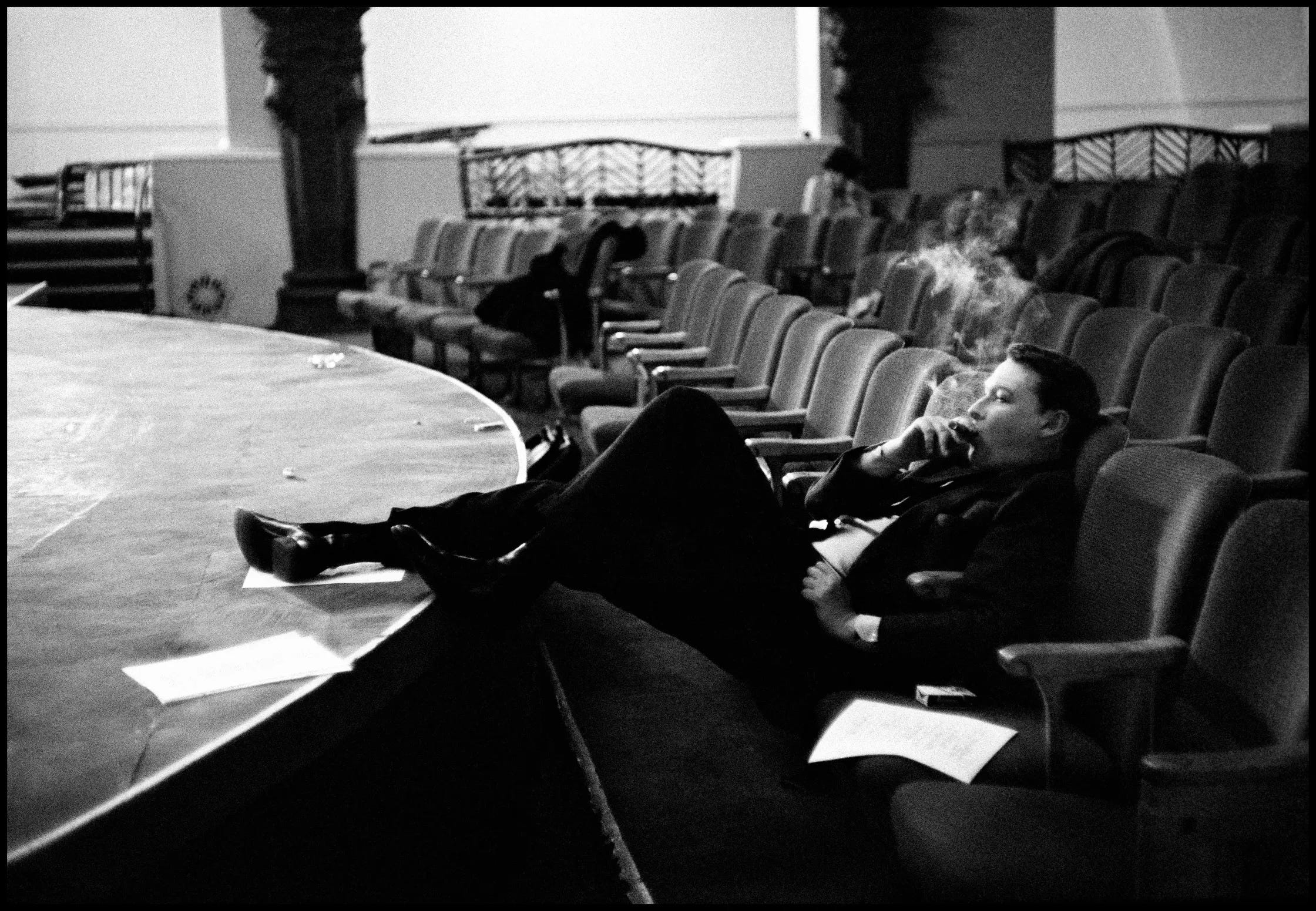
This is the first post in a new section of Time’s Corner called the Sweatbox. The name comes from the small closet under the stairs at the original Disney studios where Walt et al. would review the day’s footage.1 Since then, it’s become a general term in the animation industry for the process of reviewing footage. For me, it’s the place where I take notes on directing plays. The format will be the same as the rest of Time’s Corner, except less so.
If you’d rather not read the Sweatbox, but would like to keep getting other issues of Time’s Corner, you can unsubscribe from just this section through the Substack app. I think.
Here and There
When it comes to directing plays, I don’t have any grand theory of the art form. As far as I’m concerned, it’s an extremely practical job. There’s a script, a cast, a performance date, and (hopefully) an audience. My theory, as far as it goes, is to bring all those things together effectively and make it entertaining.
It’s like building a flagstone path. Principles of landscape architecture can be helpful during the planning stages, but when you’re on your knees in the sand and gravel, you don’t care that much about theory. You have a more pressing goal: use irregular pieces of flat rock to help people get from here to there. You figure out how to fit the stones together neatly and evenly and get the job done.
I don’t have a theory, but I do have a guiding principle that can take the form of a question: “How can we clearly communicate what we want to say to the audience?” That’s my version of “get people from here to there.” First, figure out what you want to say, then find the best way to say it. It’s the same principle directors use to figure out where to put the camera.
In many ways, the first part is harder. What are you trying to communicate? In my specific line of work, high school theater, the plays tend to be fairly simple: good guys/bad guys, redemption, slapstick humor. I often find myself saying things like, “Cheat out so the audience can see your face,” and, “You have to say that line slowly or the audience won’t get the joke.” We ain’t going for subtlety.
That said, it’s surprising what the audience will and will not pick up on. Subconsciously, they will respond to things like costume design, lighting, and blocking, but rarely will they be able to pinpoint what exactly caused them to feel the way they did.
In the musical Little Women, Jo and Beth sing a duet on the beach. It’s clear that Beth is going to die, and the song is their goodbye to each other. When we performed this at my school, I kept the scene extremely simple. The actresses sat on the floor with a prop or two and sang together, looking off into the distance. We had no fancy backdrops or sound effects. When the song was over, Beth stood up, handed her shawl to Jo, and exited, leaving Jo alone on stage. In the next scene, Jo wore Beth’s shawl on her shoulders to indicate her grief over losing her sister.
If the audience had stopped to analyze the scene, they probably would have noticed most of what I just described. But they had to move on to the next scene. It was up to us (director, actors, crew) to craft the scene such that they understood what we were trying to communicate without bothering about how we were doing it. I suppose there’s some element of theory there, but really, we just made the path as smooth as possible and got the audience from here to there.
Dispatch from Broken Bow
I was walking with my infant son this morning when three male robins in a flying free-for-all whirled between my legs and the stroller and carried on their brawl in the next yard. Ah, spring time. I’m just glad they weren’t Canadian geese.
Links
Upcoming
The musical I’m directing this spring is The Secret Garden. We have performances February 26-27 at 7pm and a matinee February 27 at 3pm. You can buy tickets at the door.
Up To
Reading: Titus Groan, a bizarre, atmospheric book. I look forward to watching Gormenghast, the TV version, when I’m done.
Watching: British panel shows, pretty much
Listening: Trying to identify pieces of classical music by name. I know “The Swan,” but I couldn’t have told you what it was called, much less that it was written by Camille Saint-Saëns. Here’s to being a life-long learner! #classicaleducation
About
I’m Christian Leithart, a writer and teacher living in Birmingham, Alabama. I’m not active on social media, but you can read my blog here. Use the button below to share this issue of Time’s Corner, if you so desire. Thanks much for reading.
I couldn’t find a reliable source that says the sweatbox was under the stairs. A few websites mentioned it, and I think I read it in a book somewhere, but I’m adding this footnote in the interest of full disclosure.